Minimal Disc Protrusion
Get expert evaluation and treatment for minimal disc protrusion in Surat. Explore personalized pain management and non-surgical treatment options for spine-related pain.
What Is Minimal Disc Protrusion?
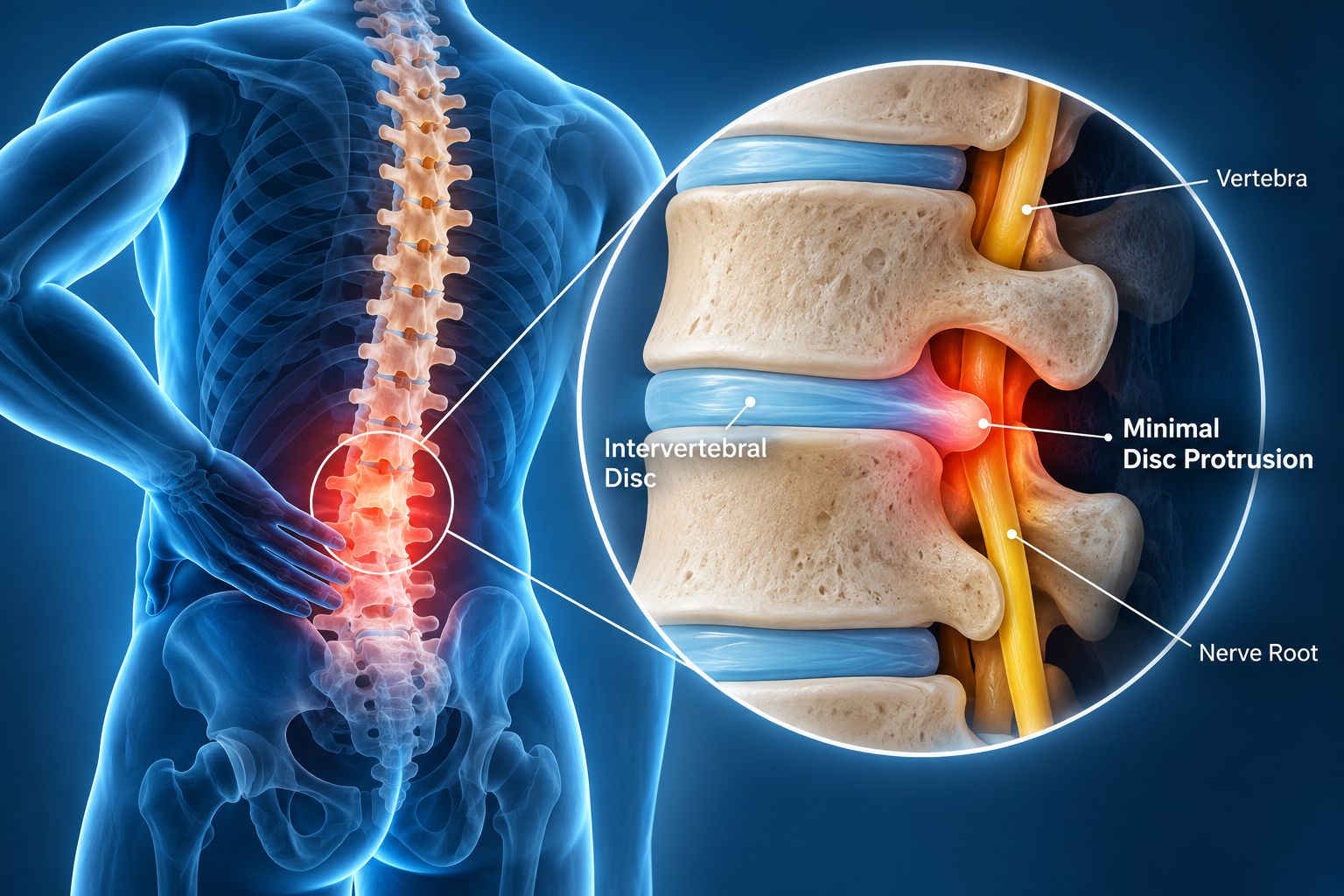
A minimal disc protrusion refers to a small change in the shape of an intervertebral disc, where part of the disc extends beyond its usual boundary. Depending on its location and relationship with nearby nerves, it may or may not cause symptoms.
Some people with a disc protrusion may experience back or neck pain, stiffness, tingling or pain that travels into an arm or leg. Others may have a disc protrusion without noticeable symptoms.
A proper clinical evaluation helps determine whether the disc finding is related to the patient's symptoms and whether further treatment or rehabilitation is required.
At Advanced Pain Care Clinic, assessment may include understanding your symptoms, posture, movement patterns and functional limitations before deciding on an appropriate management approach.
How Can Posture & Movement Affect the Spine?
Modern lifestyles often involve prolonged sitting, desk work and repetitive movements. Poor movement habits and sustained postures can place additional stress on the muscles and structures supporting the spine.
Maintaining comfortable spinal alignment, changing position regularly and developing appropriate strength and flexibility can be important parts of maintaining good back function.
Rather than focusing on maintaining one rigid posture throughout the day, the goal is to develop healthy movement habits and avoid staying in the same position for unnecessarily long periods.
Healthy Sitting
Maintain a comfortable sitting position and avoid prolonged static postures.
Regular Movement
Take movement breaks during long periods of sitting or desk work.
Build Strength
Appropriate strengthening can support movement and everyday activities.
Better Mobility
Maintain appropriate flexibility and comfortable spinal movement.
What Symptoms Can Occur?
Symptoms vary depending on the location of the disc protrusion and whether nearby structures are affected.
Back or Neck Pain
Pain may be felt around the affected area of the spine.
Radiating Pain
Some people may experience pain travelling into an arm or leg.
Tingling or Numbness
Nerve irritation can sometimes be associated with altered sensation.
Movement Difficulty
Pain or stiffness may affect normal movement and daily activities.

Managing Minimal Disc Protrusion
Management depends on the symptoms, clinical findings and individual needs of the patient. Not every disc protrusion requires the same treatment.
Movement & Exercise
Start With Comfortable Movement
Gentle movement and regular activity can help maintain mobility. Exercises should be selected according to the individual's condition and performed within comfortable limits.
Progress Strength Gradually
Once appropriate, strengthening exercises can be progressed gradually to support the muscles involved in everyday movement and physical activity.
Do Not Ignore New or Worsening Symptoms
New or worsening weakness, significant numbness, severe or rapidly increasing pain, or changes in bladder or bowel control require prompt medical evaluation.
Get Your Back Pain Evaluated
Discuss your symptoms with our specialist team and understand the appropriate next step.