Spinal Cord Stimulator
Explore spinal cord stimulation in Surat for selected chronic pain conditions. Get specialist evaluation and personalized guidance on advanced pain management options.
What Is Spinal Cord Stimulator?
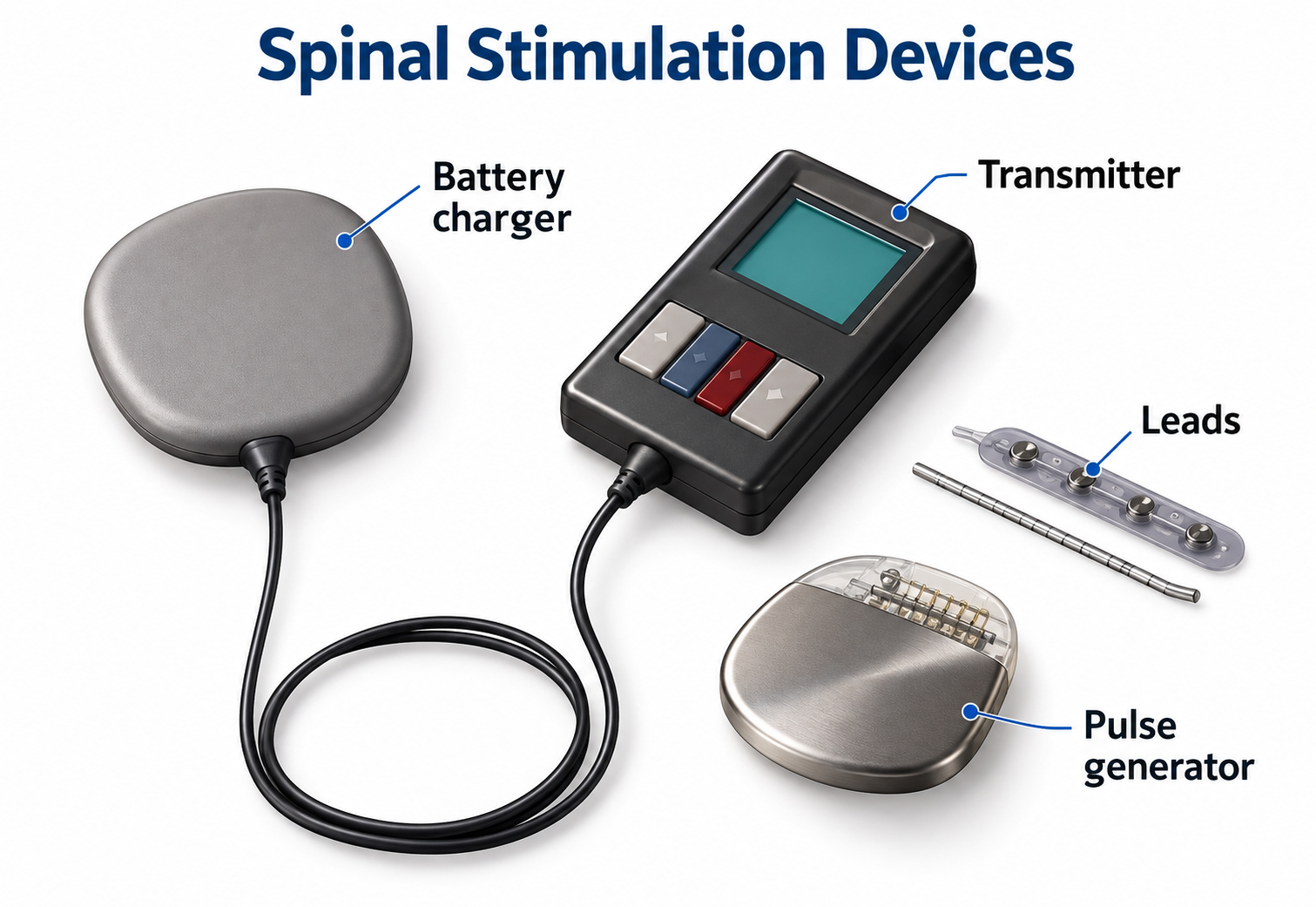
A spinal cord stimulator (SCS), also known as a dorsal column stimulator, (DCS) is an implantable medical device used to treat chronic neurological pain. An electric impulse generated by the device produces a tingling sensation that alters the perception.
The device is implanted into the epidural space either by percutaneous approach or by surgical laminectomy or laminotomy. A pulse generator or RF receiver is implanted in the abdomen or buttocks. A wire harness connects the lead to the pulse generator.
Advantages
This therapy aims at pain relief in patients who are refractory to all other treatment modalities. They are very tough group to get good results. There are many advantages of using this therapy like:
Simple Procedure
It’s a simple Percutaneous/ surgical procedure.
Nondestructive Procedure
It’s a nondestructive procedure. No permanent surgical or chemical interruption of nerve pathway is done.
Trial Therapy
A trial therapy checks whether patient is going to get pain relief or not.
Reversible
The procedure is reversible; if patient is not relieved of his symptoms, the stimulator can be removed. There will not be any side effects.
Pain & Medication Reduction
Significant reduction in pain intensity Reduction in opioids or other drug intake.
Selection Criteria
The pain syndrome should be established & patient should have radiating pain.
The conservative treatments have failed.
Drug addiction/alcohol abuse should be ruled out.
There should be no major. Trial stimulation should be successful.
Indications
Disadvantages & Complications
Cost is high compared to other treatment options although is cost- effective. Requires highly-efficient team. There may be some complications in rare occasions like lead migration, lead fractures, infection etc.
The patient must realize that single target lesioning may not be sufficient, necessitating complementary blocks for better pain relief.