Posture Correction
Discover Advanced Pain Care Clinic, where specialised pain management and advanced treatment approaches come together with a patient-focused approach to care.
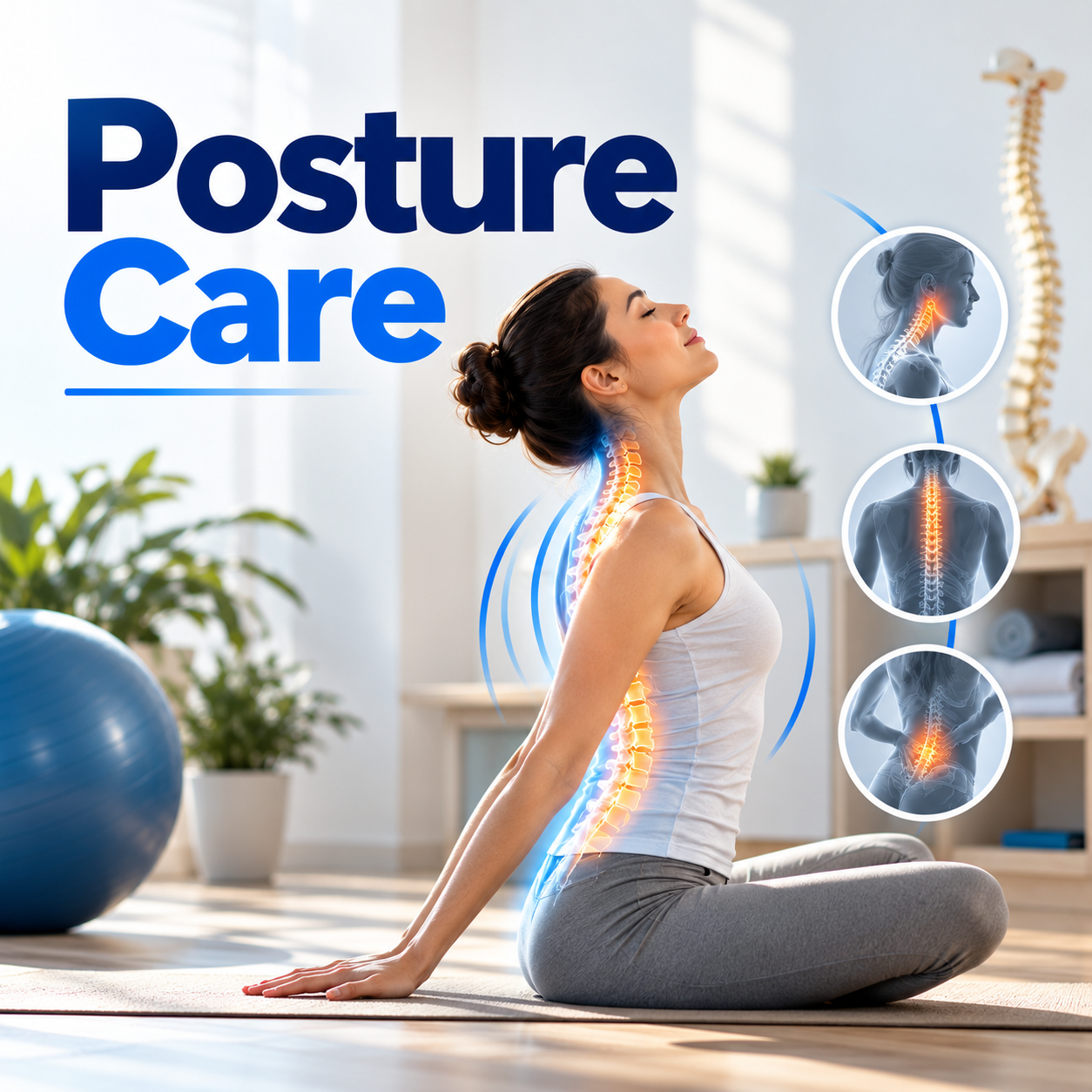
Focused Care
Why Does Posture Matter?
Posture describes the way we hold and position our body while sitting, standing, walking and performing everyday activities. Our habits, work environment, activity level and movement patterns can all influence how we position our body.
Modern lifestyles often involve long periods of sitting, computer work and limited movement. When poor positioning becomes habitual, it may contribute to discomfort and place unnecessary stress on different parts of the body.
Posture care aims to improve awareness of body positioning and encourage healthier movement habits that can be incorporated into everyday life.
What Can Affect Your Posture?
Posture problems can develop gradually through repeated daily habits, prolonged positions or changes in strength and flexibility.
Long Sitting Hours
Spending many hours sitting at a desk, on a sofa or in an awkward position can encourage unhealthy sitting habits.
Poor Workstation Setup
Incorrect screen height, chair position or desk arrangement can make it difficult to maintain a comfortable working posture.
Weakness & Imbalance
Differences in strength, flexibility or movement control can influence how the body maintains its position.
Frequent Device Use
Repeatedly looking down at phones or other devices may encourage uncomfortable neck and upper-body positioning.
Reduced Physical Activity
Limited movement can affect flexibility, strength and the body's ability to change positions comfortably.
Habitual Positions
A position repeated every day can become habitual, making it harder to notice when your posture changes.
When Should You Pay Attention?
Posture itself is only one part of musculoskeletal health, but persistent discomfort or difficulty with movement deserves proper evaluation.
Frequent neck, shoulder or back discomfort
Stiffness after prolonged sitting
Difficulty maintaining a comfortable position
Reduced flexibility or movement
Repeated discomfort during work or daily activities
Symptoms that persist or interfere with everyday life
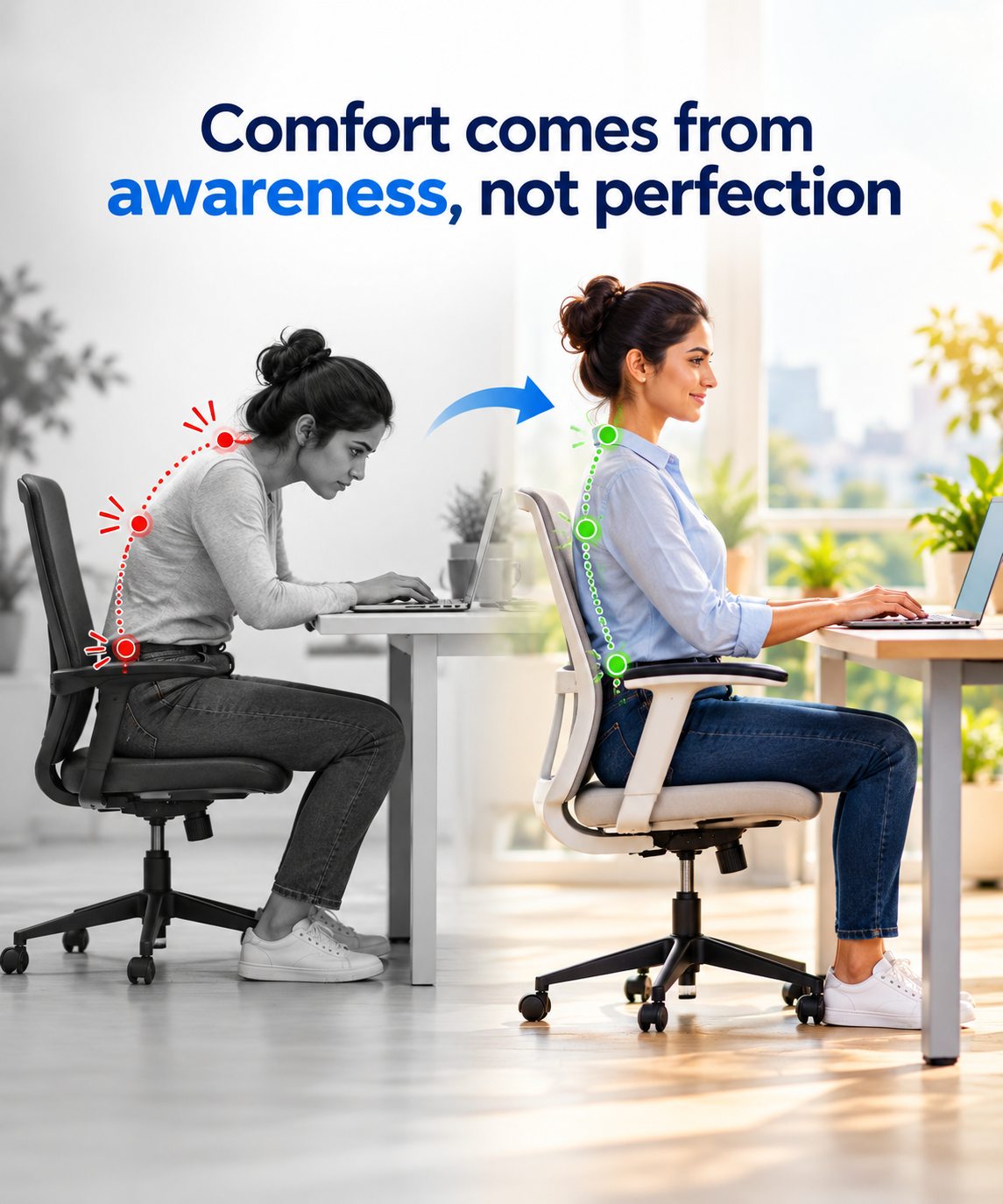
What Does a Healthy Posture Look Like?
There is no single rigid position that everyone should maintain all day. Healthy posture involves comfortable alignment and the ability to change positions regularly.
Head & Neck
Keep the head comfortably aligned rather than repeatedly pushing the chin forward or looking downward for long periods.
Shoulders
Allow the shoulders to remain relaxed rather than continuously rounding them forward.
Spine
A comfortable natural spinal position is preferable to forcing the back into an excessively straight or rigid posture.
Lower Body
When standing, distribute your weight comfortably and avoid remaining in one position for unnecessarily long periods.

Simple Habits for Better Movement
Change Position Regularly
Avoid staying in the same sitting or standing position for prolonged periods. Regular movement gives your body an opportunity to change position.
Improve Your Workstation
Keep your screen and working surface positioned so you can work comfortably without repeatedly bending or reaching forward.
Keep Moving
Regular walking and appropriate physical activity can help maintain mobility and support overall physical function.
Build Strength Gradually
Appropriate strengthening and mobility exercises can be included according to your individual needs and physical condition.
Movement Is Part of Posture Care
Exercises should be selected according to your symptoms, mobility, strength and overall health. A specialist or physiotherapist can guide you towards appropriate movements.
Mobility Exercises
Gentle movements can help maintain comfortable range of motion and reduce stiffness associated with prolonged positions.
Strengthening
Progressive strengthening may help improve physical capacity and movement control when appropriate for the individual.
Movement Awareness
Learning how you sit, stand and move can help you identify habits that may be contributing to recurring discomfort.
Posture Care Is Not a Substitute for Diagnosis
Not every neck or back problem is caused by posture. Persistent, severe or worsening pain should be evaluated by a qualified healthcare professional. Seek urgent medical attention for significant weakness, loss of sensation, loss of bladder or bowel control, or other sudden neurological symptoms.
Take the First Step Towards Better Movement
Discuss your posture, movement concerns and persistent discomfort with our specialist team.